


|
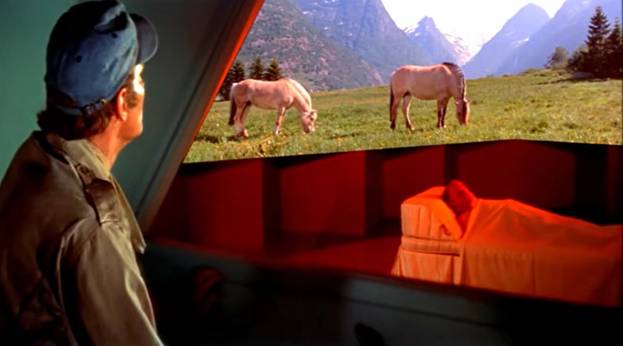
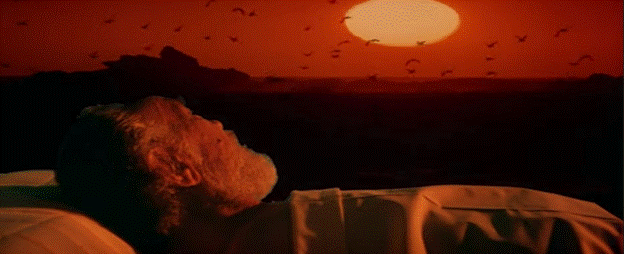
We are all dying We learn at an early age that no living thing can escape death. For me, however, it took the death of my father and the cruelty of Alzheimer’s impact on my mother, before I really started to come to grips with how poorly we, as a society, do death. As a youth, death was impossible to understand. I saw people in my life die, but I couldn’t quite grasp that I would ultimately die let alone the full extent of the decline we know as the aging process. Athletes recognize that the aging process begins in our 30s but most of us are in some form of denial well into our late 40s and 50s. I remember my 90-year-old grandmother being frustrated that while doctors would patiently listen to her list medical issues, they rarely were they able to offer any assistance. Doctors are not auto mechanics capable of rebuilding our engines. We decline and then we die. There is nothing new about death. We all die without exception. In the big scheme of things, as humans today we can live 100 years, but any one human life is but a blip on a long timeline. The planet is 4.5 billion years old although only 3.5 billion of those years included any evidence of life. Dinosaurs didn’t show up until 250 million years ago. Primates arrived 65 million years ago, the earliest humans appeared 2 million years ago and today’s humans have been hanging around for the past 300,000 years. If we think about our human clan living on a 24-hour clock, then it been about 10 minutes since Christ was born, and those born in 1926 came to life just 28 seconds ago on that same clock. As spectacular as life is, any one of our lives represents just the briefest twinkle in time. Time is perception and for the young living to 100 feels like forever. As a youth everything moved slowly. I remember wishing it would move faster so I would be old enough to drive, vote, and drink. Now, of course it feels like the weeks, months, and years fly by and I’m just as keen for time to slow down. I often wonder what it might have been like to live in another time, but I think we are privileged to live during these times. Our lives today are rich because of the discoveries, knowledge, creations, and capabilities of our forefathers. We live longer, in more comfort, with more happiness options and suffer less than any other period in time. It’s great to be alive today. So much has changed just in the past 100 years. A 100 years ago we were still electrifying the country. Communication across radio was just beginning to narrow our physical distance. Since that time, we’ve cured many diseases, developed antibiotics, and deployed effective vaccines. We mapped the human genome and discovered how to edit genes. The world came together under the United Nations. Humankind left the planet and landed on the moon. We’ve seen the birth of the digital world with integrated circuits and computers powering the things humans didn’t do so well in the first place. We connected all of humanity with the internet, television and smart phones. This is an impressive and incomplete list of examples of just how meaningful the last 100 years have been. As impressive as our progress has been, our failure to evolve death is equally surprising. Death today looks similar to what it looked like 100 years ago. Sure, we’ve made some modest death accomplishments by creating both palliative and hospice care, but the focus is largely postponing death instead of improving the dying experience. We could do much more to help people die with comfort, agency, family presence, spiritual peace, financial clarity and, above all else, dignity. The 1973 movie Soylent Green imagined what it might be like to die with beauty, peace, and pleasure. Some of us have access to assisted suicide, but no one has anything rising to what we could create to ease our transitions into death. For anything like this to work, an individual must be brave enough to choose when to die. Our opinions about the sanity of choosing to control one’s own death are largely influenced by those who are not at the end of their life and thus ill equipped to truly understand the value of such a choice. This is not a crazy decision and instead of praying for an easy death, we can guarantee this to anyone who wants it. About one-quarter of all Medicare expenditures are spent in the final year of life. Imagine if we redirected even a portion of those funds into developing better and more humane exit strategies. Imagine a having the funeral with the loved one present. We could truly celebrate the life while our elders were still alive. It’s a chance to pass along words of wisdom and truly leave one’s mark on the world they are leaving behind. I believe there will be a day in the future when humans are horrified by how we die today. They will wonder why we would let death come to us instead of taking control of our own destiny. Why on earth would want to live with an increasingly dysfunctional body, living with increasing pain, being heralded for how long we were willing to put up with the suffering. My mother, at the age of 88, is remarkably healthy but she no longer recognizes me or anyone else that loves her. She remembers nothing from her life and spends her days confused by life’s simplest things. Fifteen years ago, her father died with dementia and my mother couldn’t have been clearer that if she ever got like that, she wanted my help to die. Over the past five years as her dementia advanced, she asked me for my help to die. I told her I couldn’t help her. She has lost the ability to make big life decisions for herself, but I know this is her idea of the worst way to die. By contrast one of my best friends helped his mother die. She gathered the family, said her last words to her family, she was surrounded by everyone who loved her, and after months of hording medications, she was able to over-medicate herself and take her own life. Life is precious. Is life without joy worth living? Can we do more to create death options? As a society why do we seemingly have a blind spot for improving this critical life event? Why do we seemingly treat our aging pets with more kindness than we do to our fellow humans? I’m less confident that I have the right answers and more confident that as a society we’ve accomplished so much and we’ve largely ignored our second most important life event.
Scenes from Soylent Green
|
7/3/2026
© Greg Harris, 2026
All Rights Reserved